David Weber · 1 October 2026
Managing Data Privacy Protocols in Wellness App Expansions Across Multiple Jurisdictions
Wellness applications collect personal health metrics including heart rate patterns, sleep cycles, and activity levels as they scale operations into new markets, and organizations must align these data flows with distinct legal frameworks that govern collection, storage, and transfer. Regulatory structures differ sharply between regions, which forces development teams to build modular consent mechanisms and localized data handling routines rather than uniform global templates. Data classified as sensitive under multiple statutes requires explicit user authorization before processing begins, and companies track these requirements through centralized compliance dashboards that update automatically when statutes change.
Regional Regulatory Frameworks Governing Wellness Data
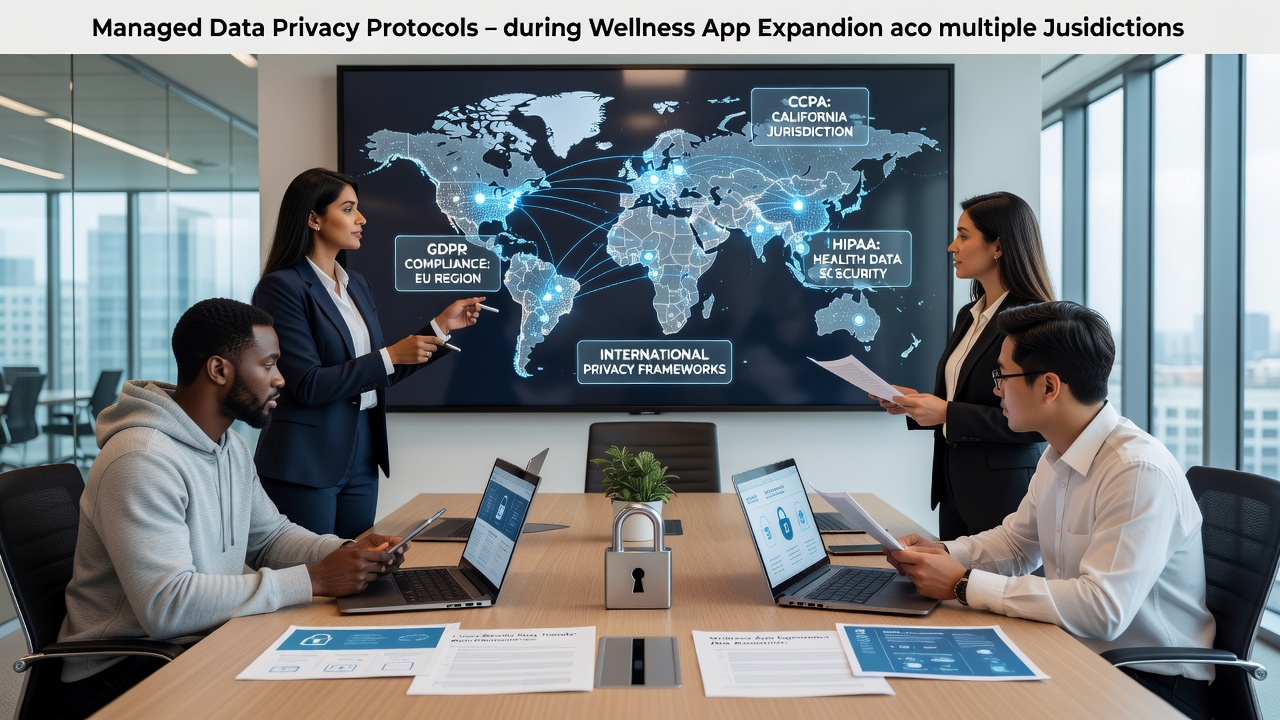
European markets apply the General Data Protection Regulation to health-related information, treating it as a special category that demands additional safeguards during cross-border movement. Organizations rely on standard contractual clauses or adequacy decisions to move records outside the European Economic Area, while maintaining records of processing activities for supervisory authority review. Canadian statutes such as the Personal Information Protection and Electronic Documents Act impose similar accountability obligations, and firms operating there appoint privacy officers who conduct regular audits of data retention schedules. Australian privacy principles require notification of data breaches within strict timeframes, prompting wellness platforms to integrate automated alert systems that notify both regulators and affected users.
California's Consumer Privacy Act and its subsequent amendments extend rights to access and deletion for residents whose wellness data enters company systems, and similar state-level measures in other U.S. jurisdictions create a patchwork that demands jurisdiction-specific user interfaces. Singapore's Personal Data Protection Act sets baseline consent standards for health applications entering Southeast Asian markets, where organizations often combine these rules with local data localization mandates. Observers note that overlapping requirements across these frameworks increase the administrative load on engineering teams responsible for maintaining separate encryption keys and access logs for each territory.
Technical Implementation of Multi-Jurisdiction Protocols
Development groups implement granular permission controls that allow users to toggle data sharing on a per-feature basis, and these controls link directly to backend systems that segment storage according to the strictest applicable rule in each region. Encryption at rest and in transit follows standards recognized by multiple authorities, while tokenization techniques replace identifiable identifiers with non-reversible strings during analytics processing. Automated data mapping tools scan codebases to flag potential transfers that might violate localization rules, and teams review flagged items during weekly compliance meetings.

Regular penetration testing and third-party audits verify that access controls prevent unauthorized internal viewing of health metrics, and findings feed into remediation plans documented for regulatory submissions. One study revealed that platforms adopting differential privacy methods during aggregation reduced re-identification risks without sacrificing aggregate trend accuracy across user populations. Those who've studied this know that maintaining version-controlled policy documents helps teams demonstrate due diligence when authorities request evidence of ongoing compliance efforts.
Operational Challenges During Geographic Scaling
Expansion timelines compress when legal reviews reveal gaps in existing consent language, and project managers adjust release schedules to accommodate jurisdiction-specific user testing. Data portability requests arrive through multiple channels, requiring support staff trained in each regulatory nuance to process exports within mandated windows. Research indicates that organizations maintaining dedicated regional compliance roles experience fewer delays during launch phases compared with centralized teams handling all territories from a single location.
Cross-border data transfer assessments must account for evolving enforcement priorities, and legal departments monitor official announcements from bodies such as the European Data Protection Board alongside guidance issued by the Office of the Privacy Commissioner of Canada. When new requirements emerge, such as updated breach notification thresholds expected to take effect in October 2026 across several Asia-Pacific jurisdictions, engineering roadmaps incorporate corresponding feature updates well in advance. What's interesting is how these staggered deadlines create rolling compliance cycles rather than single annual checkpoints.
Monitoring and Continuous Improvement Practices
Analytics platforms integrated with privacy management software track consent rates and data subject requests by region, producing reports that legal teams review during quarterly governance sessions. Training programs for product and engineering staff cover jurisdiction-specific scenarios, and completion rates feed into internal audit scores. External benchmarks published by research institutions provide comparative data on industry response times to regulatory updates, allowing organizations to calibrate their own processes against observed norms.
Conclusion
Wellness application providers coordinate technical, legal, and operational functions to satisfy overlapping privacy obligations as they enter additional markets, and documented procedures support consistent execution across teams. Continued attention to regulatory calendars and technical controls sustains lawful data practices amid shifting international requirements.